Conservation Communication: An Essential Guide Skill of Adventure Travel
If you work in adventure travel, you’ve probably felt a shift over the past years: simply visiting places and seeing the sights isn’t enough anymore. Travelers are trying to reconcile their love of travel with habitat loss, wildlife protection, natural resource management, and climate change.
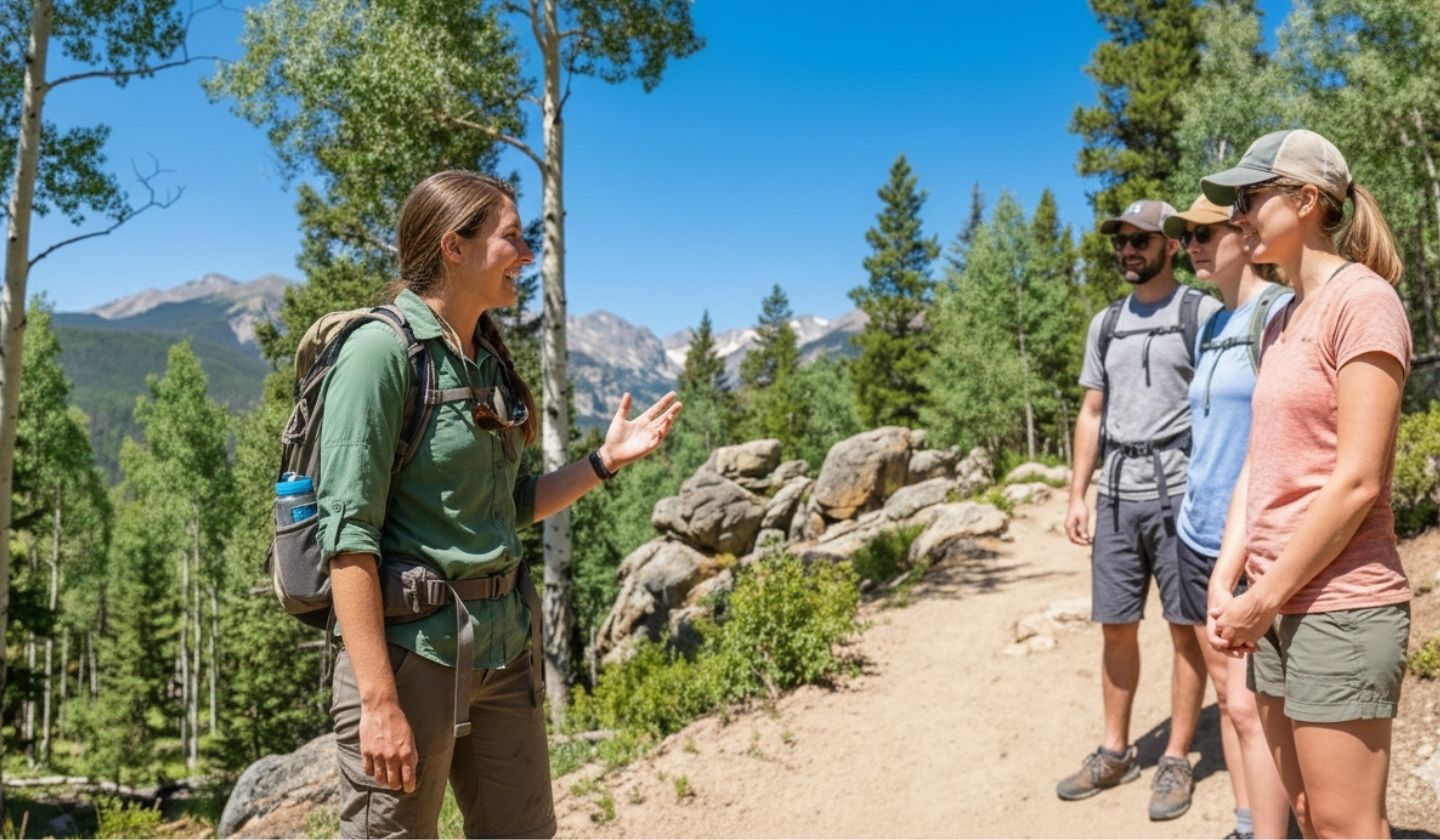
This is where conservation communication (environmental interpretation) becomes one of an outdoor guide’s primary skills. We can help travelers:
- feel connected to a place
- understand what’s at stake
- leave with a practical, personal way to help
Why conservation communication matters now
The travel industry is a crowded space, contributing to one out of every ten jobs worldwide, and responsible for 10% of global GDP (UNWTO). All this tourism has significant potential to be a key driver of sustainable development, yet there is a gap in understanding real-world implementation of sustainable initiatives like meaningful conservation action and protections of our wild places. And we all know that when natural areas are protected, local people and wildlife flourish too.
Plenty of outdoor operators can claim “ecotourism” values, but very few tour companies actually deliver any meaningful impact.
One way we, as guides, can make an impact is by enhancing the guest experience thorough conservation storytelling. When you do this well, your guests don’t just consume an experience, they participate in a journey of discovery that provides inspiration and pathways for taking meaningful conservation action.
A quick self-audit: do you communicate conservation effectively?
Most guides care deeply about the places they work. The problem isn’t motivation, it’s method.
Conservation topics can land poorly when they feel:
- political
- overwhelming or guilt-driven
- too disconnected from the localized trip experience
- like a lecture at the worst possible time
Have you had this happen: the group gets quiet, someone changes the subject, or you can feel tension and uncertainty creep in. When conservation communication falls flat, it not only misses the point, it can dampen the guest experience or even cause conflict.
The good news is there are some easy methods for leading conservation discussions in a productive manner.
What “professional” conservation communication actually looks like
These days, I treat interpretation as a core leadership skill—right alongside Group Management for Guides and Risk Management for Adventure Travel—because communication is what holds the whole guest experience together.
A professional approach usually includes:
1) Timing that respects the moment
You don’t force heavy topics into every moment. You consider the ‘arc of the traveler experience’, pay attention to interest, and invite deeper conversation at the right time.
2) Language that stays invitational
You offer ideas and stories as a funnel for exploration. You trade certainty and blame for curiosity and discussion.
3) A clear next step
You “open the door,” then make it easy for guests to walk through it, by offering realistic pathways for conservation support and action.
4) You model the behavior
Share how you stay involved through donations, volunteer work, ethical travel choices, etc. Your guests look up to you and your own passion is inspirational.
Why this belongs in modern Adventure Guide Training
If you’re building a career in adventure guiding, conservation communication is no longer “extra credit.” It’s part of modern professionalism, and a competitive differentiator. Your guests expect it.
And if you’re on the operator side, conservation communication is a sleeper hit for Adventure Tourism Staff Training because it helps standardize guest experience messaging across your whole team, and helps to achieve your company’s mission.
Waypoint’s bespoke class: Conservation Communication Skills for Guides
I've worked in the conservation travel space for over 20 years. Recently, I teamed up with my colleague, Court Whelan (PhD Ecotourism and Chief sustainability Officer of Natural Habitat Adventures) to create the Conservation Communication Skills for Guides class. It's short, easy, and very impactful: 65 minutes, online, self-directed, and it comes with a certificate you can show to employers.
Check it out. It might be helpful for you.
Sincerely
Colby
Don't Miss a Thing
Pro tips, news and exclusive offers delivered right to your inbox (occasionally).
Unsubscribe anytime.